What is Paper Crafting? Your Guide to Creative Expression
what is paper crafting

What is Paper Crafting? Your Guide to Creative Expression

Unlock a world of creativity and transform simple sheets of paper into intricate, beautiful works of art and functional items.

Start Crafting Now

Key Takeaways

  • ✓ Paper crafting is an ancient art form with diverse modern applications.
  • ✓ It encompasses techniques like card making, scrapbooking, origami, quilling, and paper sculpture.
  • ✓ The primary material is paper, but tools and embellishments vary widely.
  • ✓ Benefits include stress reduction, enhanced fine motor skills, and personalized gifting.

How It Works

1
Choose Your Project & Materials

Decide what you want to create, whether it's a card, a scrapbook page, or an origami figure. Gather the appropriate paper, tools (scissors, glue), and any desired embellishments.

2
Learn a Technique

Familiarize yourself with the basic steps of your chosen paper crafting technique. Many online tutorials and books offer beginner-friendly instructions to guide you.

3
Cut, Fold, & Assemble

Carefully cut, fold, curl, or shape your paper according to your design. Use adhesives or interlocking methods to assemble your pieces into the desired form.

4
Embellish & Personalize

Add decorative elements like stickers, glitter, ribbons, or stamps to enhance your creation. This step allows for unique personalization and adds character to your paper craft.

Unveiling the World of Paper Crafting Techniques
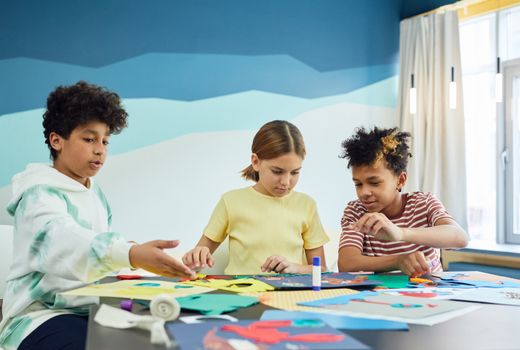
Children focusing on an art project with colored papers in a playful art class setting. Photo: Vanessa Loring / Pexels
Paper crafting is a vast and enchanting universe, offering an incredible array of techniques that transform humble sheets of paper into extraordinary works of art. At its core, paper crafting is the art of manipulating paper to create objects, decorations, or functional items. It’s an accessible hobby, making it popular across all age groups and skill levels. One of the most beloved forms is card making, where crafters design and assemble greeting cards for various occasions. This often involves layering different types of paper, stamping, embossing, and adding embellishments like ribbons and glitter. The beauty of card making lies in its ability to convey personal messages through handcrafted beauty, making each card a unique token of affection. Another prominent technique is scrapbooking, which is essentially storytelling through paper. Scrapbookers preserve memories, photographs, and mementos in decorative albums, using themed papers, stickers, and journaling to narrate life’s special moments. It’s a wonderful way to organize and display cherished memories, creating a tangible legacy for future generations. Origami, the ancient Japanese art of paper folding, transforms a flat sheet of paper into a three-dimensional sculpture without cutting or gluing. From simple cranes to intricate dragons, origami challenges spatial reasoning and patience, resulting in stunning geometric forms. Quilling, or paper filigree, involves rolling, shaping, and gluing strips of paper into delicate designs. These intricate patterns are often used to decorate cards, jewelry, and wall art, showcasing incredible detail and finesse. Each technique offers a unique creative outlet, inviting crafters to explore different facets of paper manipulation and artistic expression. Understanding these diverse methods is the first step in appreciating the rich tapestry of paper crafting.

The Therapeutic Benefits and Creative Outlets of Paper Art
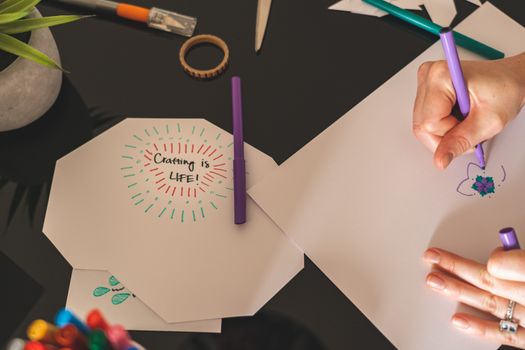
Hands creating art with markers on paper. Emphasizes creativity and artsy crafts. Photo: Castorly Stock / Pexels
Beyond the sheer joy of creation, engaging in paper crafting offers a multitude of therapeutic benefits that contribute to overall well-being. In our fast-paced, digital world, the tactile nature of working with paper provides a much-needed break, allowing individuals to disconnect from screens and reconnect with their hands and minds. The repetitive motions involved in many paper crafting techniques, such as folding, cutting, or rolling, can be deeply meditative. This focus on a specific task helps to quiet the mind, reduce stress, and alleviate anxiety, acting as a form of mindfulness. Many crafters report feeling calmer and more centered after a session of paper crafting, highlighting its effectiveness as a stress-relief tool. Furthermore, paper crafting significantly enhances fine motor skills and hand-eye coordination. Precision cutting, delicate folding, and careful gluing require dexterity and concentration, which can improve these skills over time. This is particularly beneficial for children, aiding in their developmental growth, and for adults looking to maintain cognitive function and motor control. The creative problem-solving inherent in designing and executing paper projects also stimulates cognitive abilities. Crafters often experiment with colors, textures, and forms, making decisions that foster innovation and artistic expression. The sense of accomplishment derived from completing a beautiful paper craft project boosts self-esteem and provides a tangible representation of one's creative capabilities. Whether it's the satisfaction of a perfectly folded origami crane or a heartfelt handmade card, paper art provides a powerful avenue for self-expression and personal growth, enriching lives in countless ways.

You may also find Sysadminoffice useful.

Essential Tools and Materials for Starting Your Paper Crafting Journey
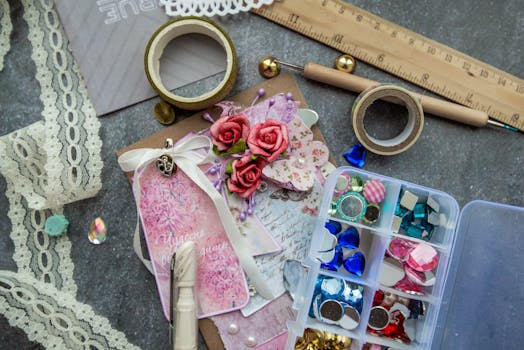
From above composition of various supplies for handicraft works placed on table with richly decorated greeting card Photo: Victoria Emerson / Pexels
Embarking on your paper crafting adventure doesn't require a massive investment, but having the right basic tools and materials can make a significant difference in your experience and the quality of your finished projects. At the heart of all paper crafting is, of course, paper itself. A wide variety of papers are available, each suited for different techniques. Cardstock, a thicker, more durable paper, is ideal for card making and scrapbooking bases. Decorative papers, often with patterns or textures, add visual interest. Specialty papers like vellum, glitter paper, or metallic paper can elevate your projects. For origami, lighter, thinner papers designed for folding are best, while quilling requires narrow strips of paper specifically cut for rolling. Experimenting with different types of paper is part of the fun and helps you discover what works best for your chosen craft. Beyond paper, a few essential tools will form the cornerstone of your crafting kit. A good pair of sharp scissors is indispensable for precise cuts. For more intricate designs or large-scale projects, a craft knife (like an X-Acto knife) with a self-healing cutting mat is highly recommended. Adhesives are crucial for assembling your creations; white craft glue, glue sticks, and double-sided tape are common choices, each serving different purposes. For measuring and scoring, a ruler and a bone folder (or scoring tool) will help create crisp, clean folds. Other useful items include pencils for marking, erasers for removing stray lines, and perhaps a pair of tweezers for handling small embellishments. As you delve deeper, you might explore specialized tools like paper punches, die-cutting machines, or embossing folders. Remember, you don't need everything at once. Start with the basics and gradually expand your toolkit as your skills and interests grow. For more detailed guidance on selecting your initial supplies, consider exploring resources on craft starter kits.

Tips for Beginners and Common Paper Crafting Mistakes to Avoid
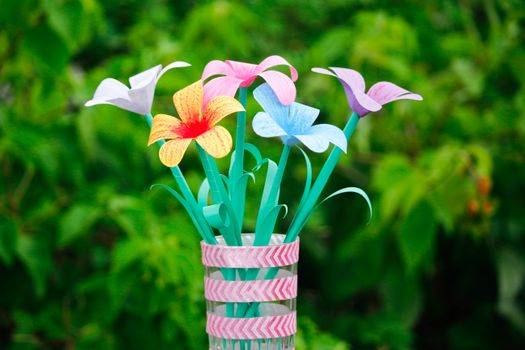
Vibrant paper flowers in a decorative vase, perfect for creative decor. Photo: Tamanna Rumee / Pexels
For those just starting their paper crafting journey, a few key tips can smooth the learning curve and prevent common frustrations. First, start simple. Don't dive into an elaborate, multi-technique project as your very first attempt. Begin with basic card making, a simple origami fold, or a straightforward scrapbook layout. Mastering fundamental techniques builds confidence and provides a solid foundation for more complex endeavors. Second, don't be afraid to experiment. Paper crafting is an art form, and there's no single 'right' way to do things. Play with different colors, textures, and embellishments. Sometimes the most unexpected combinations yield the most beautiful results. Third, utilize online resources. YouTube tutorials, craft blogs, and Pinterest are treasure troves of inspiration and step-by-step guides. Watching someone demonstrate a technique can often be more helpful than reading instructions alone. Now, let's address some common mistakes beginners often make, so you can avoid them: * **Using the Wrong Paper:** Attempting origami with thick cardstock or creating a sturdy box with thin printer paper will lead to frustrating results. Always match your paper type to your project's requirements. * **Rushing the Process:** Paper crafting requires patience. Hurrying cuts, folds, or gluing can lead to uneven lines, misaligned pieces, and a messy finish. Take your time, enjoy the process, and allow adhesives to dry properly. * **Over-Gluing:** A little glue goes a long way. Using too much adhesive can warp paper, create unsightly bumps, and ooze out, making your project look less professional. Apply glue sparingly and evenly. * **Ignoring a Cutting Mat:** Cutting directly on your table can damage surfaces and dull your craft knife quickly. Always use a self-healing cutting mat to protect your workspace and your tools. * **Not Practicing:** Like any skill, paper crafting improves with practice. Don't get discouraged if your first few projects aren't perfect. Each attempt is a learning opportunity. Embrace imperfections and celebrate your progress.

Comparison

FeatureCard MakingOrigamiQuillingScrapbooking
Primary GoalCreate greetingsFold 3D shapesDelicate designsPreserve memories
Key SkillLayering & DecoratingPrecise FoldingRolling & ShapingLayout & Storytelling
Tools NeededScissors, Glue, StampsHands OnlySlotted Tool, GlueAdhesives, Albums
Material FocusCardstock, Decorative PaperThin Folding PaperPaper StripsPatterned Paper, Photos
Complexity (Beginner)MediumLow to HighMediumMedium

What Readers Say

"I never knew what is paper crafting until I tried it, and now I'm hooked! It's such a relaxing hobby, and I love making personalized cards for my family. The sense of accomplishment is incredible."

Sarah J. · Austin, TX

"As a beginner, this guide to what is paper crafting was incredibly helpful. It demystified the process and gave me the confidence to try origami. My first crane wasn't perfect, but I'm proud of it!"

Mark D. · Seattle, WA

"Paper crafting has become my go-to stress reliever. I started with simple quilled designs, and now I'm creating intricate wall art. My friends are always amazed at what I can make from just paper."

Emily R. · Miami, FL

"I appreciate the detailed breakdown of different techniques in this article. While some projects can be a bit time-consuming, the therapeutic benefits of focusing on creating something beautiful are undeniable."

David L. · Denver, CO

"I got into scrapbooking to preserve my travel memories, and this article perfectly explains what is paper crafting and its vast potential. It's a wonderful way to combine creativity with personal history."

Jessica T. · Boston, MA

Frequently Asked Questions

What is paper crafting and how is it different from other crafts?

Paper crafting is a broad category of crafts that specifically uses paper or cardstock as the primary material. Unlike painting or pottery, which use different mediums, paper crafting focuses on manipulating paper through cutting, folding, gluing, and decorating to create various objects. Its versatility allows for both two-dimensional and three-dimensional creations.

Is paper crafting an expensive hobby to start?

No, paper crafting can be a very affordable hobby to start. You can begin with just a few basic supplies like paper, scissors, and glue. As you advance, you might invest in more specialized tools, but the initial cost is minimal, making it accessible for almost anyone to try.

How can I learn paper crafting techniques if I'm a complete beginner?

There are numerous ways to learn paper crafting as a beginner! Online resources like YouTube tutorials, craft blogs, and Pinterest offer step-by-step guides. Many local craft stores also host workshops, and books or beginner kits are excellent resources for hands-on learning. Start with simple projects and gradually work your way up.

What are the environmental impacts of paper crafting?

The environmental impact of paper crafting can be mitigated by choosing sustainable practices. Opt for recycled or sustainably sourced paper, reuse scraps, and responsibly dispose of waste. Many crafters also upcycle old books, magazines, or packaging, turning potential waste into beautiful new creations.

How does paper crafting compare to digital art for creative expression?

While both offer creative expression, paper crafting provides a unique tactile and sensory experience that digital art lacks. The physical act of cutting, folding, and feeling the texture of paper engages different parts of the brain. Paper crafts result in tangible, three-dimensional objects, offering a different kind of satisfaction and presence compared to purely digital creations.

Who should try paper crafting?

Paper crafting is suitable for anyone looking for a creative outlet, a relaxing hobby, or a way to make personalized gifts and decorations. It's great for children to develop fine motor skills, for adults seeking stress relief, and for seniors to maintain dexterity and cognitive function. If you enjoy working with your hands and expressing creativity, paper crafting is for you.

Are there any safety concerns with paper crafting?

Generally, paper crafting is very safe. The main safety concern involves using sharp tools like scissors and craft knives. Always use these tools carefully, cut away from your body, and use a cutting mat to protect surfaces. Supervise children when they are using sharp tools and ensure glues are non-toxic, especially for younger crafters.

What are some emerging trends in paper crafting?

Emerging trends in paper crafting often include the integration of digital elements, such as using electronic cutting machines for intricate designs, and incorporating mixed media elements like fabric or natural materials. There's also a growing interest in sustainable crafting, using recycled materials, and exploring paper engineering for interactive pop-up cards and kinetic sculptures.

Now that you understand what is paper crafting, it's time to unleash your inner artist. Dive into this rewarding hobby and discover the endless possibilities that await you with just a few sheets of paper and a spark of imagination. Start your paper crafting journey today and create something truly unique!

Topics: what is paper craftingpaper craft techniquespaper art benefitsDIY paper projectscrafting with paper
Leo List
Brampton weed
Adultwork EstrelaBet Vai de Bet R7 Bet Betão Galera Bet Rainbet Bet9ja Shop SportyBet BetKing Sisal Loto Foot Hollywoodbets YesPlay Odibets RushBet Jugabet BetWarrior BetCity MSport betPawa Fortebet