What is Macrame Craft Technique? Your Ultimate Guide
what is macrame craft technique

What is Macrame Craft Technique? Your Ultimate Guide

Unravel the timeless art of knotting, creating beautiful textiles and decor with just your hands and cord.

Start Your Macrame Journey

Key Takeaways

  • ✓ Macrame is a form of textile produced using knotting techniques, not weaving or knitting.
  • ✓ The word 'macrame' is believed to be derived from the Arabic word 'migramah', meaning 'fringe'.
  • ✓ It originated with 13th-century Arab weavers and was introduced to Europe by Moors.
  • ✓ Only a few basic knots are required to create a wide variety of intricate patterns and designs.

How It Works

1
Gather Your Materials

Start with suitable cords (cotton, jute, hemp) and a stable working surface like a dowel or ring. The right materials make a significant difference in your macrame experience.

2
Learn Basic Knots

Master fundamental knots such as the Square Knot and the Half Hitch. These form the building blocks for almost all macrame projects and patterns.

3
Practice Knotting Patterns

Combine basic knots to create repetitive patterns and textures. Experiment with different tensions and cord arrangements to see how they affect the final design.

4
Design and Create Projects

Apply your knotting skills to craft items like plant hangers, wall hangings, or jewelry. Let your creativity guide you in designing unique and personalized macrame pieces.

Unraveling the History and Evolution of Macrame
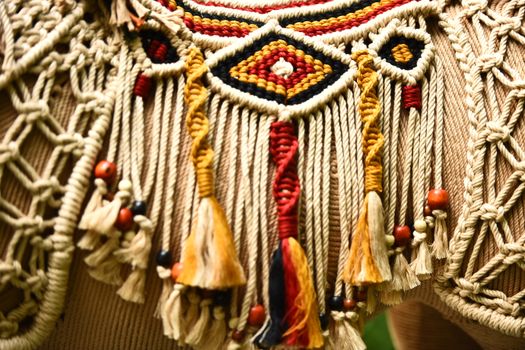
Intricately designed macrame wall hanging with colorful patterns and beads. Photo: Sóc Năng Động / Pexels
To truly understand what is macrame craft technique, we must first journey back through its rich and fascinating history. Macrame is not merely a modern trend; it is an ancient art form with roots stretching back centuries, evolving across cultures and continents. The term 'macrame' itself is believed to originate from the 13th-century Arabic word 'migramah,' which translates to 'fringe.' This early form of macrame was used by Arab weavers to finish the edges of woven textiles, creating decorative fringes on shawls and veils. It was a practical and aesthetic solution, preventing unraveling while adding beauty. From the Middle East, macrame traveled to Europe. It was introduced to Spain by the Moors in the 13th century and later gained significant popularity in Italy, particularly in Genoa, during the 15th century. By the 17th century, macrame had made its way to England, reportedly brought by Queen Mary II, who taught the art to her ladies-in-waiting. However, it was during the Victorian era that macrame experienced a massive resurgence. Women, particularly those of the upper and middle classes, embraced it as a popular pastime. They created intricate household items such as tablecloths, bedspreads, and curtains, as well as fashionable accessories like purses and shawls. The Victorian fascination with decorative arts provided fertile ground for macrame to flourish, transforming it from a simple fringe technique into a sophisticated craft. After a period of decline in the early 20th century, macrame surged back into popularity in the 1970s, becoming an iconic symbol of bohemian style and self-expression. This era saw macrame used to create everything from plant hangers and wall art to clothing and jewelry, reflecting a desire for natural materials and handmade goods. The 70s macrame often featured chunky cords and earthy tones, becoming synonymous with a relaxed, free-spirited aesthetic. Today, macrame is experiencing yet another revival, but with a modern twist. Contemporary artists and crafters are pushing the boundaries, experimenting with new materials, refined designs, and integrating macrame into minimalist and modern home decor. This continuous evolution highlights the timeless appeal and adaptability of the macrame craft technique, ensuring its place in the world of craft arts for generations to come. Understanding its journey helps us appreciate the depth and versatility of this beautiful skill.

The Fundamental Knots: Building Blocks of Macrame
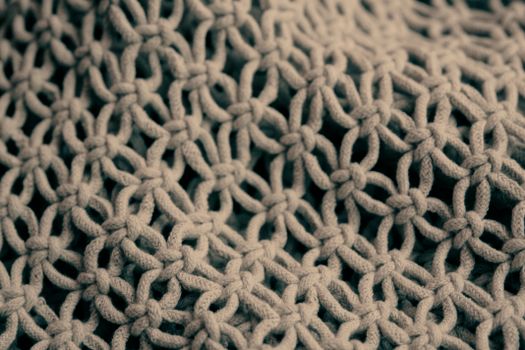
Detailed close-up of a handmade knitted pattern showcasing intricate weaving and knots. Photo: Karen Laårk Boshoff / Pexels
At its heart, what is macrame craft technique boils down to the mastery of a few fundamental knots. Unlike knitting or weaving, which involve loops and interlacing threads, macrame relies solely on the strategic tying of cords. This simplicity is both its beauty and its accessibility, as even complex-looking pieces are often just variations and combinations of these basic building blocks. Let's explore the essential knots that every aspiring macrame artist should learn. **1. The Lark's Head Knot:** This is typically the first knot you'll learn, as it's used to attach your working cords to a dowel, ring, or anchor cord. It's simple, secure, and creates a neat, decorative edge. To tie it, fold a cord in half, place the loop over your anchor, and then pull the two loose ends through the loop. It’s the foundation for starting almost any macrame project. **2. The Square Knot:** Arguably the most important and versatile knot in macrame, the square knot is what gives macrame its distinctive texture and pattern. It’s a combination of two half knots, tied in opposite directions, resulting in a flat, balanced knot. A series of square knots can create solid panels, intricate braids, or geometric designs. Understanding how to tie both a left-facing and a right-facing half knot is crucial, as alternating them forms the square knot, while repeating one direction creates a spiral or twisted effect. **3. The Half Hitch Knot (and Double Half Hitch):** The half hitch is a basic knot used to create straight or diagonal lines. When tied repeatedly along an anchor cord, it becomes a series of double half hitches. This allows you to create intricate patterns, define shapes, and create borders within your macrame piece. You can form horizontal, vertical, or diagonal lines, making it incredibly useful for detailed work and texturing. The direction you tie these knots dictates the angle of your lines, offering immense design flexibility. **4. The Gathering Knot (or Wrapping Knot):** This knot is used to neatly bundle a group of cords together, often at the top of a plant hanger or to finish a fringe. It involves wrapping a separate piece of cord tightly around a bundle of cords, then securing the ends to create a clean, finished look. It's an elegant way to transition from multiple working cords to a single hanging point or to add decorative elements. While there are many other knots and variations, mastering these four core knots will unlock the ability to create a vast array of macrame projects. Practice is key; the more you tie them, the more consistent and confident your work will become. These knots are the language of macrame, allowing you to translate your creative visions into tangible, beautiful textile art.

Essential Tools and Materials for Your Macrame Journey
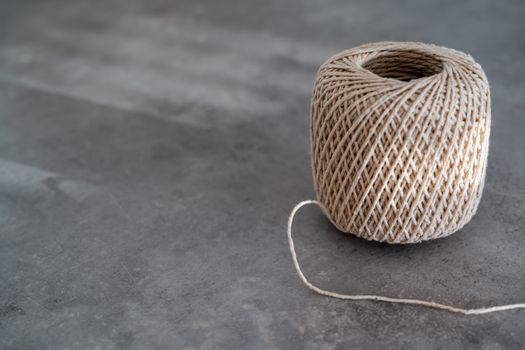
Close-up of a rustic spool of twine resting on a textured surface, perfect for crafts. Photo: Castorly Stock / Pexels
Embarking on the macrame craft technique requires more than just knowing the knots; having the right tools and materials is crucial for a smooth and enjoyable experience. The beauty of macrame lies in its relative simplicity regarding equipment, making it an accessible craft for beginners. However, selecting the appropriate supplies can significantly impact the quality and aesthetic of your finished projects. **1. Cords:** The cord is the most vital component. Macrame cords come in various materials, thicknesses, and colors. Common choices include: * **Cotton:** This is the most popular choice, especially for beginners. Cotton cords are soft, easy to work with, produce clean knots, and come in many colors. They are ideal for wall hangings, plant hangers, and decorative items. You'll often find single-strand twisted, 3-ply twisted, or braided cotton cords. * **Jute:** A natural, rustic fiber that offers a more earthy and textured look. Jute is strong and durable, making it suitable for outdoor projects or pieces where a natural, organic feel is desired. * **Hemp:** Another natural fiber, hemp is very strong and durable, often used for jewelry or items that need to withstand wear and tear. It can be a bit stiffer than cotton but softens with use. * **Synthetic Cords (e.g., Nylon, Polyester):** These are durable, often weather-resistant, and come in vibrant colors. They are excellent for outdoor macrame, keychains, or items that need to be washable, though they might not have the same natural drape as cotton. When choosing cord, consider the project. Thinner cords (2-4mm) are good for intricate details and jewelry, while thicker cords (5-8mm+) are better for large wall hangings, plant hangers, and chunky pieces that need to fill space. **2. Scissors:** A sharp pair of scissors is essential for cleanly cutting your cords. Dull scissors can fray the ends, making it harder to work with and affecting the final appearance. **3. Measuring Tape or Ruler:** Accurate measuring is key in macrame to ensure your cords are cut to the correct length and your knots are spaced evenly. This prevents running out of cord mid-project and helps maintain symmetry. **4. Dowel Rods, Rings, or Branches:** These serve as the anchor for your macrame project. Dowel rods are popular for wall hangings, while metal or wooden rings are used for plant hangers, dream catchers, or mandalas. For a rustic touch, a found piece of driftwood or a sturdy tree branch can be an excellent, unique anchor. **5. S-Hooks or Clamps:** These are incredibly useful for holding your dowel or ring in place while you work. You can hang your project from an S-hook on a clothing rack, curtain rod, or even a door frame. Clamps can secure your dowel to a table edge, providing stability. **6. T-Pins (Optional but Recommended):** For smaller projects or when working on a flat surface, T-pins can help secure individual cords or sections of your work to a macrame board or corkboard, allowing for tighter, more precise knots. **7. Macrame Board (Optional):** A cork board or foam board can be very helpful for smaller projects, allowing you to pin your work securely and maintain even tension. Some boards even have grid lines for easy measurement. Investing in quality materials, especially your cord, will make your macrame experience much more rewarding. Don't be afraid to experiment with different types and textures as you grow in your craft.

Common Mistakes and Expert Tips for Macrame Success
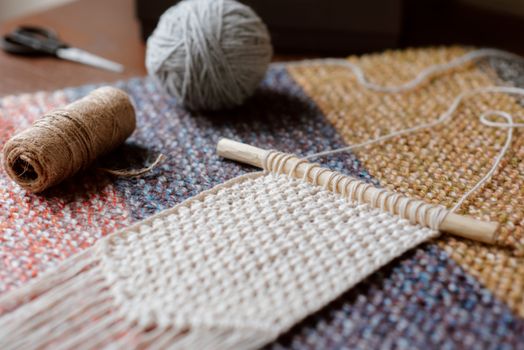
Beige knitted piece of macrame decor and thread near knitting ball on wool surface at home Photo: Anete Lusina / Pexels
As with any craft, learning what is macrame craft technique comes with its challenges and opportunities for growth. Avoiding common pitfalls and embracing expert advice can significantly enhance your macrame journey, leading to more satisfying results and a more enjoyable process. **Common Mistakes to Avoid:** * **Incorrect Cord Length Estimation:** A frequent beginner mistake is cutting cords too short or excessively long. Too short, and you'll run out mid-project; too long, and you'll waste material and spend more time untangling. Always err on the side of slightly longer for your first few projects, and keep notes on cord usage for future reference. * **Inconsistent Tension:** This is perhaps the most critical factor affecting the final look of your macrame. If your knots are tied with varying tension, the piece will look uneven, lumpy, and less professional. Practice is key to developing a consistent hand. * **Skipping Practice:** Jumping straight into a complex project without practicing basic knots can be frustrating. Spend time simply tying square knots and half hitches until they feel natural and look uniform. * **Ignoring the Back of Your Work:** While the front is what's seen, a messy back can indicate poor technique or hidden knots that might unravel. Aim for neatness on both sides. * **Not Securing Your Workpiece:** Trying to macrame with a constantly moving dowel or ring is incredibly difficult. Always secure your project firmly using S-hooks, clamps, or by taping it down. **Expert Tips for Macrame Success:** * **Start Simple:** Begin with small, straightforward projects like a basic plant hanger or a simple wall hanging that primarily uses one or two types of knots. This builds confidence and mastery of the fundamentals. * **Invest in Quality Cord:** While budget-friendly options exist, a good quality cotton cord (especially 3-ply twisted or single-strand) will be easier to work with, produce cleaner knots, and elevate the look of your finished piece. * **Watch Tutorials:** Visual learning is incredibly effective for macrame. YouTube and online courses offer countless free and paid tutorials that demonstrate knotting techniques clearly. * **Use a Macrame Board (for smaller projects):** A cork or foam board with T-pins helps keep cords organized and taut, making intricate patterns much easier to manage and ensuring even spacing. * **Measure Twice, Cut Once:** Always double-check your cord measurements before cutting. It saves material and frustration. * **Take Breaks:** Macrame can be repetitive. If you find yourself getting frustrated or your hands are tired, take a break. Come back with fresh eyes and renewed energy. * **Embrace Imperfection:** Your first few projects won't be perfect, and that's okay! Each knot tied is a step in your learning journey. Celebrate the progress, not just the perfection. Macrame is a craft that rewards patience and practice, allowing you to develop a unique style over time.

Comparison

FeatureMacrameKnittingWeaving
Primary TechniqueKnotting cordsInterlocking loops with needlesInterlacing warp & weft threads
Tools RequiredHands, dowel/ring, scissorsKnitting needles, yarnLoom, shuttle, yarn
Material TypeCord (cotton, jute, hemp)Yarn (wool, acrylic, cotton)Thread/Yarn
Finished TextureTextured, often dimensionalSoft, stretchy, fabric-likeFlat, structured fabric
Beginner FriendlinessHigh (few basic knots)Medium (basic stitches)Lower (loom setup)
Common ProjectsWall hangings, plant hangersSweaters, scarves, blanketsRugs, tapestries, fabric

What Readers Say

"I always wondered what is macrame craft technique, and this guide explained it perfectly! I feel confident now to start my first plant hanger. The history section was especially insightful."

Sarah J. · Austin, TX

"As a complete beginner, I found the breakdown of fundamental knots incredibly helpful. The tips for avoiding mistakes are practical and exactly what I needed to read before starting my project."

Mark D. · Seattle, WA

"This article clarified so much about what is macrame craft technique. Thanks to the advice on materials, my first wall hanging turned out looking far more professional than I expected, with clean, even knots."

Emily R. · Denver, CO

"While comprehensive, I would have loved a quick link to a video tutorial for each knot. Still, the written explanations were clear, and I appreciate the detail on cord types."

David L. · Miami, FL

"I've been knitting for years and wanted to try something new. This guide on what is macrame craft technique showed me how different and accessible macrame is. My living room now has beautiful, handmade decor!"

Jessica M. · Portland, OR

Frequently Asked Questions

What is the absolute easiest macrame project for a complete beginner?

For a complete beginner, the easiest macrame project is typically a simple plant hanger or a small wall hanging that primarily uses the Square Knot. These projects require mastering only one or two fundamental knots, allowing you to focus on consistent tension and cord management without being overwhelmed by complex patterns. Look for tutorials that specify 'beginner-friendly' and have minimal cord cutting.

Is macrame difficult to learn if I'm not naturally crafty?

Not at all! Macrame is surprisingly accessible, even for those who don't consider themselves 'crafty.' It relies on repetitive movements and mastering a few basic knots, rather than intricate artistic skills. With patience and practice, anyone can learn what is macrame craft technique and create beautiful pieces. Many find the repetitive nature of knotting to be very meditative and relaxing.

How do I calculate how much cord I need for a macrame project?

Estimating cord length can be tricky. A general rule of thumb is that each working cord should be 4-8 times the desired finished length of your project, depending on the complexity and density of the knots. Knots consume a lot of cord. It's always better to cut cords longer than you think you'll need; you can always trim excess, but you can't add length. Many patterns provide specific cord length recommendations to guide you.

Is macrame an expensive hobby to start?

Macrame can be a very affordable hobby to start. Your primary investment will be in good quality cord and a basic anchor like a dowel or ring. You likely already own scissors and a measuring tape. While specialized tools like macrame boards exist, they are not essential for beginners. You can often find affordable cord bundles online or at craft stores, making the initial outlay quite modest.

How does macrame compare to knitting or crocheting?

Macrame differs significantly from knitting and crocheting. Knitting and crocheting use needles or hooks to create loops of yarn that interlock, forming fabric. Macrame, conversely, uses only your hands to tie various knots with cords, without any tools to form the primary structure. This results in a more textured, often more sculptural, and less stretchy finished product compared to knitted or crocheted items.

Who should consider learning what is macrame craft technique?

Anyone looking for a relaxing, creative outlet should consider learning macrame. It's ideal for those who enjoy working with their hands, appreciate natural textures, and want to create unique home decor, gifts, or accessories. It's also great for individuals seeking a mindful hobby, as the repetitive knotting can be quite therapeutic. No prior crafting experience is necessary, just a willingness to learn.

Are there any safety concerns when doing macrame?

Macrame is generally a very safe craft. The main safety considerations are using sharp scissors carefully for cutting cords and ensuring your working surface is stable to prevent your project from falling. If using natural fibers like jute or hemp, some individuals with sensitive skin might experience mild irritation, but this is uncommon. Always work in a well-lit area to avoid eye strain.

What are the future trends in macrame craft technique?

Future trends in macrame are leaning towards more refined, minimalist designs, often incorporating mixed media like beads, crystals, or even paint. Expect to see more intricate patterns created with finer cords, integrated into modern home decor, and used in fashion accessories beyond traditional bohemian styles. Sustainable and ethically sourced cords are also gaining popularity, aligning with a broader eco-conscious movement in crafts.

Now that you understand what is macrame craft technique, its rich history, and essential knots, you're ready to embark on your own creative journey. Grab some cord, choose a simple project, and discover the satisfying art of knotting. Your next beautiful handmade creation awaits!

Topics: what is macrame craft techniquemacrame knotsmacrame for beginnersmacrame historymacrame supplies
Leo List
Brampton weed
Adultwork EstrelaBet Vai de Bet R7 Bet Betão Galera Bet Rainbet Bet9ja Shop SportyBet BetKing Sisal Loto Foot Hollywoodbets YesPlay Odibets RushBet Jugabet BetWarrior BetCity MSport betPawa Fortebet