Fun & Easy DIY Craft Projects for Kids: Unleash Creativity!
diy craft projects for kids

Fun & Easy DIY Craft Projects for Kids: Unleash Creativity!

Transform everyday materials into extraordinary creations and build lasting memories with these engaging children's crafts.

Start Crafting Today!

Key Takeaways

  • ✓ Crafting boosts fine motor skills and hand-eye coordination.
  • ✓ DIY projects encourage problem-solving and critical thinking.
  • ✓ Engaging in crafts can reduce screen time and promote imaginative play.
  • ✓ Family crafting sessions strengthen bonds and create cherished memories.

How It Works

1
Gather Your Supplies

Before starting any project, collect all necessary materials. Many DIY crafts use common household items, making them accessible and affordable.

2
Choose a Project by Age/Skill

Select a craft appropriate for your child's age and developmental stage. This ensures engagement and prevents frustration, leading to a more positive experience.

3
Follow Simple Instructions

Guide your child through each step, offering assistance as needed but allowing them to lead. Encourage their independence and unique artistic expression.

4
Celebrate Their Creation

Once the project is complete, praise their efforts and display their artwork. This builds confidence and reinforces the joy of creative accomplishment.

Unlocking Creativity with Engaging Children's Craft Activities
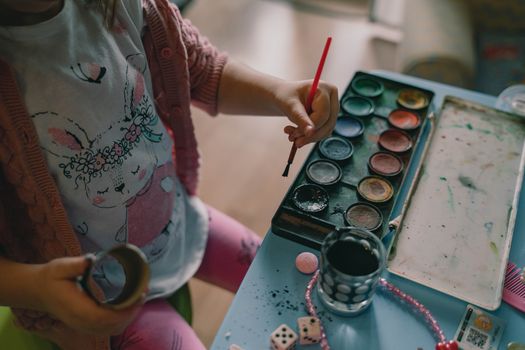
A young child painting with watercolors, wearing a cute printed shirt, engaging in creative art at home. Photo: Vladimir Srajber / Pexels
In an increasingly digital world, providing children with opportunities for hands-on, creative exploration is more important than ever. DIY craft projects for kids offer a fantastic avenue for this, transforming ordinary afternoons into adventures of imagination and skill-building. These aren't just about keeping kids busy; they're about fostering critical developmental areas, from fine motor skills and hand-eye coordination to problem-solving and self-expression. When children engage in crafting, they're not just making an object; they're constructing ideas, testing theories, and seeing their visions come to life. The process of planning, executing, and completing a craft project teaches patience, perseverance, and the satisfaction of achievement. Moreover, many crafts can be tailored to different age groups, making them versatile activities for families with children of varying ages. For toddlers, simple tasks like tearing paper or gluing large shapes can be incredibly beneficial for developing dexterity. Older children can tackle more complex projects that involve intricate cutting, detailed painting, or even basic engineering principles. The beauty of DIY crafts lies in their accessibility. You don't need expensive kits or specialized tools. Often, the most engaging projects emerge from materials readily available around the house: cardboard tubes, empty cereal boxes, old newspapers, bottle caps, yarn scraps, and even natural elements found in the backyard. This teaches children resourcefulness and an appreciation for repurposing, instilling early lessons in sustainability. Beyond the tangible skills, crafting provides a safe space for emotional expression. Children can explore colors, textures, and forms to convey feelings or tell stories without words. It's a non-judgmental environment where every creation is celebrated for its uniqueness. This creative freedom boosts self-esteem and encourages individuality. Furthermore, crafting can be a wonderful social activity. Whether it's a parent and child working together, siblings collaborating on a joint project, or a group of friends sharing supplies and ideas, crafts foster communication, cooperation, and sharing. These interactions are invaluable for social development, teaching children to listen, compromise, and appreciate diverse perspectives. Incorporating craft activities into a child's routine can significantly enrich their development and provide a much-needed balance to academic pressures and screen time. It’s an investment in their holistic growth, nurturing their minds, bodies, and spirits through joyful, hands-on discovery. Let's delve into some fantastic ideas that promise to inspire and delight both children and adults alike.

Top DIY Craft Projects for Toddlers and Preschoolers
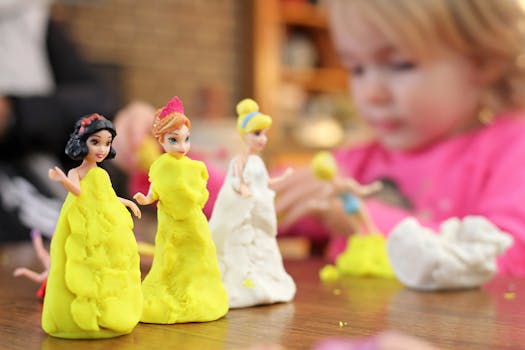
A child enjoying creative play with colorful clay figurines indoors. Photo: Jennifer Murray / Pexels
For the youngest crafters, the focus is on sensory exploration, developing fine motor skills, and simple cause-and-effect. These DIY craft projects for kids aged 2-5 are designed to be safe, easy, and highly engaging, often requiring minimal adult supervision after initial setup. Remember, the process is far more important than the perfect outcome at this age. One fantastic project is 'Pasta Necklace & Bracelet Making.' All you need is dried pasta (like penne, rigatoni, or ditalini), food coloring, rubbing alcohol, and string or yarn. To color the pasta, place it in a Ziploc bag with a few drops of food coloring and a tiny splash of rubbing alcohol, shake well, then spread on parchment paper to dry. Once dry, toddlers can thread the colorful pasta onto string, developing hand-eye coordination and pincer grasp. Another classic is 'Paper Plate Animals.' Provide paper plates, construction paper scraps, googly eyes, glue sticks, and crayons. Children can draw faces, glue on ears, tails, and other features to create their favorite animals. This encourages imaginative play and recognition of animal shapes. 'Cotton Ball Clouds' are simple and sensory. Give children blue construction paper, cotton balls, and glue. They can pull apart cotton balls to make fluffy clouds and glue them onto the blue paper, creating a sky scene. This is excellent for tactile sensory input. 'Sponge Painting' is another hit. Cut sponges into various shapes (circles, squares, stars) and provide washable paints. Children can dip the sponges into paint and press them onto paper, creating patterns and textures. This helps with grip strength and understanding shapes. For a natural craft, try 'Leaf Rubbings.' Gather leaves of different shapes and sizes. Place a leaf under a piece of thin paper, then use the side of a crayon to rub over the paper, revealing the leaf's intricate veins and outline. This introduces children to nature's beauty and texture. Lastly, 'Playdough Creations' are always a winner. You can easily make homemade playdough with flour, salt, water, cream of tartar, and food coloring. Provide various tools like cookie cutters, plastic knives, and rolling pins. Playdough is incredible for strengthening hand muscles, promoting imaginative play, and developing spatial awareness. These simple projects provide endless entertainment and foundational learning experiences, setting the stage for more complex crafting as they grow.

Creative DIY Crafts for School-Aged Children (6-12 Years)
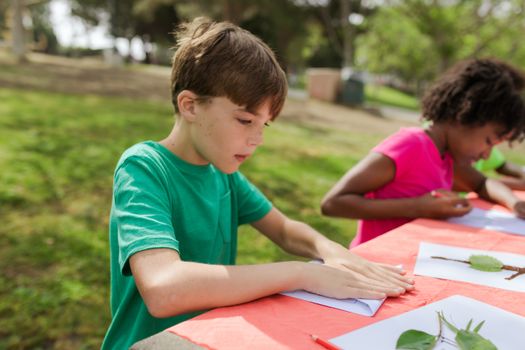
Young kids engage in outdoor crafting activities during summer camp, learning and having fun. Photo: RDNE Stock project / Pexels
As children grow, their dexterity, attention span, and ability to follow multi-step instructions increase, opening up a world of more intricate and rewarding DIY craft projects for kids. These activities not only refine existing skills but also introduce new concepts like basic engineering, design principles, and storytelling through art. For school-aged children, 'Recycled Robot Building' is a fantastic project. Gather an assortment of recycled materials like cardboard boxes (cereal boxes, tissue boxes), paper towel rolls, plastic bottles, bottle caps, aluminum foil, and craft wire. Provide strong glue, tape, scissors, and markers. Children can design and assemble their own unique robots, encouraging creativity, problem-solving, and an understanding of three-dimensional construction. This project also promotes environmental awareness by repurposing materials. Another engaging idea is 'Salt Dough Ornaments or Sculptures.' Salt dough is easy to make with flour, salt, and water. Children can knead the dough, roll it out, use cookie cutters to make shapes, or sculpt small figures. After baking or air-drying, these creations can be painted and decorated. This craft is excellent for tactile sensory input, fine motor development, and exploring sculpture. 'DIY Slime or Gak' continues to be a popular choice. While requiring adult supervision for ingredient mixing, children love the process of creating their own stretchy, gooey concoctions. Basic recipes often involve clear glue, baking soda, and contact lens solution (containing boric acid). Adding glitter, food coloring, or small beads makes it even more exciting. This introduces basic chemistry concepts in a fun, tangible way. For a more artistic endeavor, 'Tie-Dye T-Shirts or Fabric' is a vibrant option. Using fabric dyes and white cotton items (t-shirts, pillowcases, tote bags), children can learn various tying techniques (spiral, crumple, bullseye) to create unique patterns. This teaches about color mixing, pattern design, and patience as they wait for the dye to set. It's a fantastic way to personalize clothing and express individual style. Lastly, 'Origami Animals or Objects' provides a wonderful challenge. With just paper, children can learn to fold intricate shapes like cranes, foxes, or boats. This project significantly enhances fine motor skills, spatial reasoning, and the ability to follow precise instructions. There are numerous online tutorials and books available that cater to different skill levels. These advanced crafts for kids offer a more complex and satisfying creative outlet, allowing them to produce items they can use, display, or even gift, further boosting their sense of accomplishment.

Tips for Successful Crafting Sessions and Common Pitfalls to Avoid
Vibrant beads sorted by color in a plastic container, perfect for crafting and jewelry making. Photo: Alexey Demidov / Pexels
To ensure your DIY craft projects for kids are always a hit, a little preparation and strategic thinking go a long way. First and foremost, **set up a dedicated craft zone.** This could be a kitchen table covered with a disposable tablecloth, an old sheet on the floor, or a designated craft corner. Having a specific area helps contain mess and signals to children that it's time for creative work. **Gather all supplies beforehand.** There's nothing that derails a craft session faster than realizing you're missing a crucial item mid-project. Lay everything out within easy reach, organized by step if necessary. **Prioritize safety.** Always supervise young children, especially when using scissors, glue guns (for older kids, with strict supervision), or small parts that could be choking hazards. Choose non-toxic materials whenever possible. **Embrace the mess.** Crafting is inherently messy, and that's part of the fun! Expect spills, paint on fingers, and glitter everywhere. A relaxed attitude about mess makes the experience more enjoyable for everyone. Have wet wipes, paper towels, and a trash can readily available. **Focus on the process, not just the product.** While a beautiful finished craft is satisfying, the real value lies in the learning and enjoyment during the creation process. Encourage experimentation, allow for mistakes, and praise effort over perfection. This fosters a growth mindset and reduces pressure. **Offer choices.** Let children pick their colors, materials (from a safe selection), or even the specific project. This gives them a sense of ownership and increases engagement. **Keep it age-appropriate.** Frustration quickly sets in when a craft is too difficult. Choose projects that match your child's developmental stage to ensure success and enjoyment. **Know when to step back.** Provide guidance but resist the urge to take over. Let your child problem-solve and make their own artistic decisions. Your role is to facilitate, not to create their masterpiece for them. **Clean up together.** Involve children in the cleanup process. This teaches responsibility and respect for materials and the shared space. Make it part of the routine. **Document the fun.** Take photos of the process and the finished products. These memories and tangible creations will be cherished for years to come. By following these tips, you can transform any crafting session into a positive, enriching, and joyful experience for your children, fostering their creativity and building lasting memories.

Comparison

FeatureBest Option (Ages 6-12)Alternative 1 (Ages 2-5)Alternative 2 (Ages 8+)
Mess LevelMedium (paint, glue)Low-Medium (pasta, playdough)High (slime, tie-dye)
Skill FocusFine Motor, Problem-SolvingSensory, DexterityPrecision, Design
Materials CostLow-Medium (recycled, basic)Very Low (household items)Medium (specific kits/dyes)
Parental SupervisionModerateHighLow-Moderate
Creative FreedomHighMediumVery High

What Readers Say

"These DIY craft projects for kids transformed our rainy afternoons! My 7-year-old loved making the recycled robots, and it kept him engaged for hours. Such creative and easy ideas."

Sarah J. · Austin, TX

"As a busy parent, I appreciate how simple and affordable these craft ideas are. My toddler adored the pasta necklace project, and we already have plans for more. Highly recommend for family fun!"

Mark D. · Orlando, FL

"We tried the salt dough ornaments, and my kids (ages 5 and 9) had a blast. They proudly displayed their creations, and it sparked so much imaginative play afterward. A definite win for creative development!"

Emily R. · Seattle, WA

"The tips for successful crafting were really helpful, especially embracing the mess! Some projects were a bit too advanced for my youngest, but the variety means there's something for everyone to enjoy."

David L. · Denver, CO

"My daughters and their friends spent an entire afternoon tie-dyeing t-shirts using these ideas. They loved the process and ended up with unique shirts they wear constantly. Fantastic for a group activity!"

Jessica M. · Boston, MA

Frequently Asked Questions

What are the best age-appropriate DIY craft projects for kids?

For toddlers (2-5), focus on sensory crafts like playdough, sponge painting, or simple paper plate animals. For school-aged children (6-12), try recycled robot building, salt dough sculptures, or tie-dye. Always choose projects that match their fine motor skills and attention span.

Are DIY craft projects for kids expensive to set up?

Not at all! Many of the best DIY craft projects for kids utilize common household items such as cardboard boxes, paper towel rolls, pasta, cotton balls, and natural elements. You often don't need to buy specialized kits, making them very budget-friendly.

How can I make crafting less messy with children?

To minimize mess, set up a dedicated craft zone with a protective covering like an old tablecloth or newspaper. Have all supplies ready, and keep wet wipes and paper towels close by. Involve children in the cleanup to teach responsibility and contain spills quickly.

What are the educational benefits of DIY crafts for kids?

DIY crafts offer numerous educational benefits, including enhancing fine motor skills, hand-eye coordination, and problem-solving abilities. They foster creativity, encourage self-expression, introduce basic scientific concepts (like color mixing), and promote patience and perseverance.

How do DIY craft projects compare to pre-made craft kits?

DIY projects often offer more creative freedom and encourage resourcefulness, as children use everyday materials to create. Pre-made kits provide convenience and clear instructions but can sometimes limit imaginative exploration. Both have their place, but DIY fosters deeper learning and adaptability.

Who should engage in DIY craft projects with kids?

Anyone looking to spend quality time with children while fostering their development! Parents, grandparents, caregivers, and educators can all benefit from engaging in DIY craft projects. They are excellent for individual play, sibling bonding, or group activities.

Are there any safety concerns to keep in mind for kids' crafts?

Yes, always supervise young children, especially when using scissors, small beads, or strong adhesives. Ensure all materials are non-toxic, particularly paints and glues. Choose age-appropriate tools and materials to prevent choking hazards or injuries.

What's the future trend for DIY craft projects for kids?

The trend is moving towards eco-friendly and sustainable crafting, utilizing recycled and natural materials. There's also a growing interest in STEAM-focused crafts that integrate science, technology, engineering, art, and math, making learning hands-on and fun.

Embrace the joy and educational power of DIY craft projects for kids. Dive into these creative ideas, transform simple materials into cherished memories, and watch your child's imagination soar. Start your next family crafting adventure today and build skills that last a lifetime!

Topics: diy craft projects for kidskids crafts ideaseasy children's craftscreative activities for kidscrafts for toddlers
Leo List
Brampton weed
Adultwork EstrelaBet Vai de Bet R7 Bet Betão Galera Bet Rainbet Bet9ja Shop SportyBet BetKing Sisal Loto Foot Hollywoodbets YesPlay Odibets RushBet Jugabet BetWarrior BetCity MSport betPawa Fortebet