What Craft Tools Do I Need? Your Essential Guide
what craft tools do I need

What Craft Tools Do I Need? Your Essential Guide

Unlock your creative potential with the right tools. This guide helps you build a versatile and effective crafting toolkit.

Start Crafting Now

Key Takeaways

  • ✓ Starting with versatile, multi-purpose tools saves money and space.
  • ✓ Safety tools like cutting mats and finger guards are crucial for all crafters.
  • ✓ Investing in quality tools initially can prevent frustration and improve results.
  • ✓ Your specific craft dictates specialized tools, but a core set is universally useful.

How It Works

1
Assess Your Craft Interest

Before buying, identify the specific crafts you're most interested in exploring. This helps narrow down specialized tool requirements beyond the basics.

2
Gather Universal Essentials

Start with a foundational set of tools like scissors, rulers, and cutting mats that are useful across almost all crafting disciplines. These form the backbone of your toolkit.

3
Add Craft-Specific Tools Gradually

Once you have the basics, begin acquiring tools specific to your chosen craft, such as knitting needles for yarn crafts or a sewing machine for fabric projects. Expand as your skills grow.

4
Organize and Maintain Your Toolkit

Proper storage and regular maintenance of your tools will prolong their life and keep your crafting space efficient. A well-organized kit makes crafting more enjoyable.

The Universal Crafting Toolkit: Your Foundation
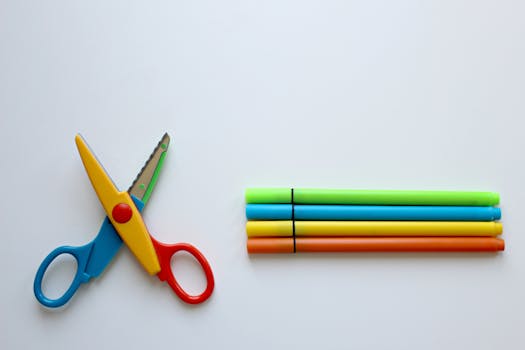
Bright stationery set on a white background with colorful scissors and markers. Photo: Pixabay / Pexels
Embarking on a crafting journey, whether you're a complete novice or looking to expand your horizons, often begins with the fundamental question: "what craft tools do I need?" The answer, while seemingly complex due to the vast array of crafting disciplines, actually has a very clear starting point. There's a core set of universal tools that every crafter, regardless of their chosen medium, will find indispensable. These aren't just 'nice-to-haves'; they are the foundational elements that enable precision, safety, and efficiency across almost all creative projects. First and foremost, a good pair of scissors is paramount. Not just any scissors, but a dedicated pair for crafting. Fabric scissors should never be used on paper, and vice-versa, as it dulls the blades, making them ineffective for their intended purpose. Invest in a sharp, comfortable pair for general cutting and perhaps a smaller, finer pair for intricate detail work. Alongside scissors, a reliable craft knife or utility knife with a supply of fresh blades is essential for precise cuts on various materials, from paper to foam. Always use this with a self-healing cutting mat to protect your work surface and prolong blade life. A metal ruler, preferably with a non-slip backing, is another non-negotiable item. It provides a straight edge for cutting and accurate measurements, far superior to a plastic ruler which can be easily nicked by a craft knife. Measuring tools extend beyond just rulers. A flexible tape measure is crucial for projects involving curves or fabric. Pencils (both graphite for general marking and colored pencils for specific materials) and erasers are vital for sketching designs, marking cut lines, or making temporary notes. Adhesives are another cornerstone. A good quality craft glue suitable for multiple materials (like a strong PVA glue) and a glue stick for paper projects are excellent starting points. As you delve deeper, you might explore hot glue guns for quick bonds or specialized fabric glues. Safety is not just a suggestion; it's a requirement. Beyond the cutting mat, consider finger guards if you're frequently using craft knives, and proper ventilation if you're working with strong adhesives or paints. A basic first-aid kit with bandages is also a sensible addition to any craft space. Lastly, a good organizational system – be it a tackle box, clear containers, or dedicated drawers – will save you countless hours searching for tools and keep your workspace tidy, fostering a more enjoyable and productive crafting experience. This universal toolkit forms the bedrock upon which all other specialized crafting endeavors are built, making the answer to "what craft tools do I need?" much clearer from the outset. For more insights into setting up your creative space, check out our guide on organizing your craft room.

Specialized Tools for Popular Craft Disciplines

An artisan carefully shaping a glass piece under magnifying lamp indoors. Photo: João Jesus / Pexels
Once you've established your universal crafting toolkit, the next step in answering "what craft tools do I need?" involves exploring the specialized equipment required for particular craft disciplines. The world of crafting is incredibly diverse, and each niche has its own unique set of instruments designed to facilitate specific techniques and achieve desired results. Understanding these specialized tools is key to successfully diving into your chosen hobby. For those drawn to textile arts like sewing, quilting, or embroidery, the list expands significantly. A sewing machine is often the centerpiece, with various models available from basic mechanical ones for beginners to advanced computerized machines. Alongside it, you'll need a selection of sewing needles (hand and machine), thread snips, a seam ripper (an absolute lifesaver!), pins, a pin cushion, thimbles, and an iron and ironing board for pressing seams. Quilters will also benefit from rotary cutters, quilting rulers, and self-healing mats specifically designed for fabric. Embroiderers will require embroidery hoops, various types of embroidery floss, and specialized needles. If paper crafts like scrapbooking, card making, or origami pique your interest, you'll find a different set of essentials. Beyond the basic craft knife and ruler, consider a paper trimmer or guillotine for perfectly straight cuts, various punches (shape punches, border punches) for decorative elements, scoring tools for crisp folds, and embossing tools for adding texture. Stamps and ink pads are also popular for adding personalized touches. For intricate die-cutting, a manual or electronic die-cutting machine can be a game-changer, opening up a world of complex shapes and designs. Jewelry making, another popular craft, demands its own specialized arsenal. Pliers are fundamental – round nose, flat nose, and chain nose pliers are essential for bending wire, opening jump rings, and crimping. Wire cutters are also a must-have. Depending on the type of jewelry, you might also need crimping tools, bead reamers, a jeweler's saw, files, and various mandrels for shaping. Safety glasses are highly recommended when working with wire and small components. Yarn crafts such as knitting and crocheting have relatively simple tool requirements but offer immense creative possibilities. Knitting needles come in various sizes and materials (metal, bamboo, plastic) and types (straight, circular, double-pointed). Crochet hooks similarly vary in size. Other useful items include stitch markers, tapestry needles for weaving in ends, row counters, and blocking mats with pins for shaping finished projects. Each of these specialized tool sets builds upon the universal foundation, allowing crafters to delve deeply into their chosen art form with the right equipment at their fingertips.

Investing in Quality: Why It Matters for Your Crafting Journey
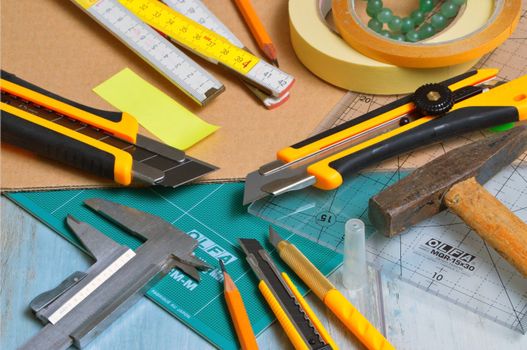
A variety of crafting tools including cutters, ruler, and tape on a work desk. Photo: Adonyi Gábor / Pexels
When you're asking "what craft tools do I need?" and contemplating your purchases, a crucial consideration is the quality of the tools. It might be tempting to opt for the cheapest options, especially when starting out, but investing in good quality tools can significantly impact your crafting experience, the quality of your finished projects, and even your long-term enjoyment of the hobby. This isn't to say you need to buy the most expensive professional-grade equipment right away, but understanding the benefits of quality will guide your decisions. Firstly, quality tools offer superior performance and precision. A sharp pair of scissors that cuts cleanly without fraying, a craft knife with a sturdy handle that doesn't wobble, or a ruler with accurate markings will make a world of difference. Cheap tools often lead to frustration: dull blades rip rather than cut, flimsy handles break, and inaccurate measurements result in wasted materials and unsatisfactory outcomes. Precision is key in many crafts, and good tools enable you to achieve it with less effort and greater consistency. This directly translates into higher quality finished products that you'll be proud to display or gift. Secondly, durable tools last longer. While a budget tool might save you a few dollars upfront, if it needs to be replaced frequently due to breakage or wear, the long-term cost can quickly surpass that of a higher-quality item. Investing in tools made from robust materials, with good construction, means they will withstand repeated use and maintain their functionality over time. This not only saves you money in replacements but also reduces waste, aligning with more sustainable crafting practices. Think of it as an investment in your hobby; well-maintained quality tools can serve you for years, even decades. Thirdly, better tools often enhance safety and comfort. Ergonomically designed handles on scissors, pliers, or rotary cutters reduce hand fatigue and the risk of repetitive strain injuries, especially during long crafting sessions. Sturdier craft knives are less likely to slip, and reliable cutting mats offer better protection. When you feel comfortable and secure with your tools, you can focus more on the creative process and less on struggling with uncooperative equipment. This improved user experience makes crafting more enjoyable and less of a chore. Finally, quality tools can inspire confidence and creativity. Knowing that your tools are reliable and capable allows you to tackle more complex projects and experiment with new techniques without the added worry that your equipment will fail you. This freedom can unlock new levels of creativity and skill development. While a beginner doesn't need every top-of-the-line gadget, prioritizing quality for frequently used items like cutting tools, measuring devices, and core adhesives is a wise strategy. It ensures that your answer to "what craft tools do I need?" includes not just the right items, but the right *kind* of items, setting you up for success and satisfaction in your crafting journey. For tips on maintaining your tools, see our guide on extending the life of your craft supplies.

Common Craft Tool Mistakes and How to Avoid Them
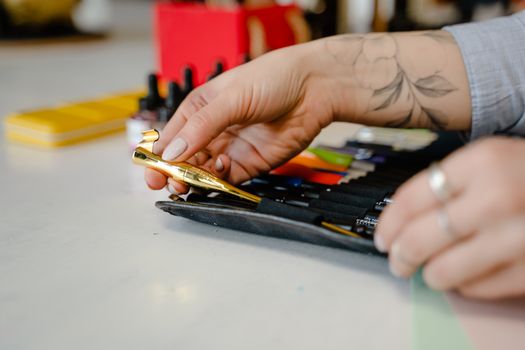
A close-up of an artist organizing calligraphy pens on a table indoors. Photo: AI25.Studio Studio / Pexels
Navigating the world of craft tools can be daunting, and even experienced crafters can fall into common pitfalls. Understanding these mistakes and how to avoid them is just as important as knowing "what craft tools do I need." By sidestepping these errors, you can save money, prevent frustration, and ensure a smoother, more enjoyable crafting experience. One of the most frequent mistakes is *buying too many tools too soon*. It's easy to get carried away by the vast array of shiny gadgets available. However, many specialized tools are only necessary for specific, advanced techniques. Start with the universal essentials and the basic tools for your chosen craft. As your skills develop and your projects become more complex, you'll naturally discover which additional tools are genuinely needed. This gradual approach prevents clutter and wasted expenditure on tools that gather dust. Another common error is *neglecting tool maintenance*. Dull blades, sticky glue guns, or rusty pliers can ruin a project and even cause injury. Regularly clean your tools, sharpen blades when necessary, and store them properly to prevent damage. For instance, always wipe down craft knives and scissors after use, and ensure glue guns are free of dried glue. A little maintenance goes a long way in prolonging tool life and ensuring they perform optimally. *Using the wrong tool for the job* is another pitfall. As mentioned earlier, using fabric scissors on paper will dull them, making them ineffective for fabric. Similarly, trying to force a small pair of pliers to handle heavy-gauge wire can damage both the pliers and your project. Always take a moment to consider if you have the appropriate tool for the task at hand. If not, it might be worth acquiring the correct one rather than risking damage or poor results. *Ignoring safety precautions* is a serious mistake. Crafting often involves sharp objects, hot tools, and potentially toxic materials. Always use cutting mats, wear safety glasses when necessary (e.g., when cutting wire or using power tools), and ensure good ventilation when working with glues, paints, or sprays. Never rush a cut or use a tool carelessly. Your safety should always be paramount. *Poor organization* leads to wasted time and frustration. A cluttered workspace where tools are lost or damaged is inefficient. Invest in storage solutions like toolboxes, drawer organizers, or wall-mounted pegboards. Knowing where everything is and being able to access it easily makes crafting a much more pleasant experience. Finally, *prioritizing price over quality* is a mistake that often backfires. While budget tools have their place, opting for the cheapest option for frequently used or critical tools can lead to frustration, poor results, and the need for premature replacements. Striking a balance between cost and quality, especially for core items, is a smart strategy. By being mindful of these common mistakes, you can build a highly functional and enjoyable crafting toolkit, ensuring that your answer to "what craft tools do I need?" also includes the wisdom of how to use and care for them effectively. * **Don't Overbuy Early:** Resist the urge to purchase every tool you see. Start with essentials and expand as needed. * **Maintain Your Tools:** Clean, sharpen, and store tools properly to extend their lifespan and effectiveness. * **Use the Right Tool:** Always match the tool to the task to prevent damage and achieve better results. * **Prioritize Safety:** Utilize cutting mats, safety glasses, and proper ventilation to prevent accidents. * **Organize Your Space:** Keep tools tidy and accessible to save time and reduce frustration. * **Balance Price and Quality:** Invest in quality for frequently used tools, even if it costs a bit more upfront.

Comparison

FeatureBest Option (Versatile)Alternative 1 (Budget)Alternative 2 (Specialized)
ScissorsFiskars Amplify (multi-material)Basic craft scissors setKai Dressmaking Shears (fabric)
Cutting MatSelf-healing, 18x24 inchesThinner, smaller matLarge rotary cutting mat (quilting)
Craft KnifeX-Acto #1 with safety capDisposable utility knifeSwivel knife (intricate cuts)
RulerMetal, non-slip, 18-inchPlastic rulerQuilting ruler with grid lines
AdhesiveAleene's Tacky Glue (multi-purpose)Basic school glue stickFabric Fusion Permanent Adhesive
Safety GearFinger guard & safety glassesHeat-resistant gloves (hot glue)
StorageArtBin Super SatchelPlastic shoeboxRolling craft cart

What Readers Say

"This guide truly answered my question, 'what craft tools do I need?' I was overwhelmed, but now I have a clear list of essentials and feel confident starting my scrapbooking hobby."

Sarah J. · Austin, TX

"As a beginner woodcarver, I found the section on universal tools incredibly helpful. It clarified the basics I needed before diving into specialized carving sets, saving me money."

Mark P. · Seattle, WA

"Following the advice to invest in quality scissors and a good cutting mat made a huge difference in my sewing projects. My cuts are cleaner, and my frustration has significantly decreased."

Emily R. · Orlando, FL

"The article is comprehensive, though I wish there was a bit more on digital crafting tools. However, for physical crafts, it's an excellent resource for understanding what craft tools do I need."

David L. · Denver, CO

"I've been crafting for years, but the section on common mistakes made me rethink my tool maintenance. It's a great reminder for even experienced crafters."

Jessica M. · Boston, MA

Frequently Asked Questions

What are the absolute basic craft tools every beginner needs?

Every beginner should start with a good pair of craft scissors, a reliable craft knife with extra blades, a self-healing cutting mat, a metal ruler, pencils, erasers, and a strong, multi-purpose craft glue. These tools provide a solid foundation for almost any craft and allow for precision and safety.

Is it better to buy craft tool sets or individual tools?

While tool sets can seem convenient, they often contain a mix of useful and unnecessary items, and the quality can be inconsistent. It's generally better to buy individual tools, especially for core items, allowing you to choose higher quality for frequently used essentials and build a toolkit tailored to your specific needs.

How do I keep my craft tools organized and accessible?

Effective organization involves using clear containers, tackle boxes, drawer dividers, or pegboards. Group similar tools together (e.g., all cutting tools, all adhesives). Label containers clearly, and ensure frequently used tools are within easy reach. Regular decluttering also helps maintain an organized space.

How much should I expect to spend on a basic craft toolkit?

The cost can vary widely based on quality and brand, but a good basic craft toolkit (scissors, knife, mat, ruler, glue) can range from $50 to $150. Investing a bit more in quality for these core items often pays off in durability and performance, saving money in the long run.

What's the difference between craft scissors and regular household scissors?

Craft scissors are typically sharper, more precise, and designed for specific materials (e.g., fabric, paper). Regular household scissors are often less sharp and not suitable for intricate work or delicate materials, and using them for crafting can lead to frayed edges or damaged projects.

Who should prioritize investing in ergonomic craft tools?

Anyone who spends significant time crafting, especially those with hand or wrist issues, should prioritize ergonomic tools. They are designed to reduce strain and fatigue, making crafting more comfortable and preventing repetitive strain injuries, allowing for longer, more enjoyable creative sessions.

Are there any safety concerns with certain craft tools?

Yes, craft knives, rotary cutters, and hot glue guns pose safety risks. Always use cutting mats, keep fingers away from blades, and use finger guards. Exercise caution with hot glue guns to prevent burns. Ensure good ventilation when using strong adhesives, paints, or sprays to avoid inhaling fumes.

What are some emerging trends in craft tools?

Emerging trends include more sophisticated electronic cutting machines with broader material compatibility, smart tools that connect to apps for design and precision, and eco-friendly or sustainably sourced tool options. There's also a growing emphasis on modular and customizable tool systems to adapt to various projects.

Now that you have a comprehensive answer to 'what craft tools do I need,' it's time to build your perfect toolkit. Start with the essentials, expand as your skills grow, and embark on your creative journey with confidence and the right equipment. Happy crafting!

Topics: what craft tools do I needessential craft suppliesbeginner craft toolscrafting toolkitbasic craft equipment
Leo List

DK Escorts LU Escorts AT Escorts SE Escorts FI Escorts CH Escorts DE Escorts HR Escorts IE Escorts GR Escorts CZ Escorts NO Escorts BE Escorts FR Escorts SI Escorts IL Escorts NL Escorts PL Escorts HU Escorts ES Escorts IT Escorts PT Escorts SK Escorts RO Escorts ZA Escorts UY Escorts US Escorts UK Escorts NZ Escorts AU Escorts
Brampton weed
Adultwork EstrelaBet Vai de Bet R7 Bet Betão Galera Bet Rainbet Bet9ja Shop SportyBet BetKing Sisal Loto Foot Hollywoodbets YesPlay Odibets RushBet Jugabet BetWarrior BetCity MSport betPawa Fortebet