Master Craft Room Organization Ideas for Creativity
craft room organization ideas

Master Craft Room Organization Ideas for Creativity

Transform your chaotic crafting space into a haven of creativity and efficiency with our ultimate guide.

Start Organizing Now

Key Takeaways

  • ✓ An organized craft room boosts creativity and reduces stress.
  • ✓ Utilizing vertical space is crucial for maximizing storage in any craft room size.
  • ✓ Categorization and labeling are fundamental to efficient craft supply retrieval.
  • ✓ Regular decluttering prevents overwhelm and maintains a functional workspace.

How It Works

1
Assess Your Current Space

Before buying any organization tools, take stock of your existing craft room. Identify problem areas, unused spaces, and the types of crafts you do most frequently.

2
Declutter and Categorize

Remove everything from your craft area. Sort items into categories: keep, donate, toss. Group similar items together (e.g., all yarn, all beads, all paper).

3
Plan Your Layout

Based on your categories and workflow, design a logical layout. Consider zones for different activities, ensuring frequently used items are easily accessible.

4
Implement Storage Solutions

Invest in storage solutions that fit your space and items. Think shelves, drawers, wall-mounted organizers, and clear containers to keep everything visible and tidy.

Unlocking Efficiency: The Power of Smart Craft Storage Solutions
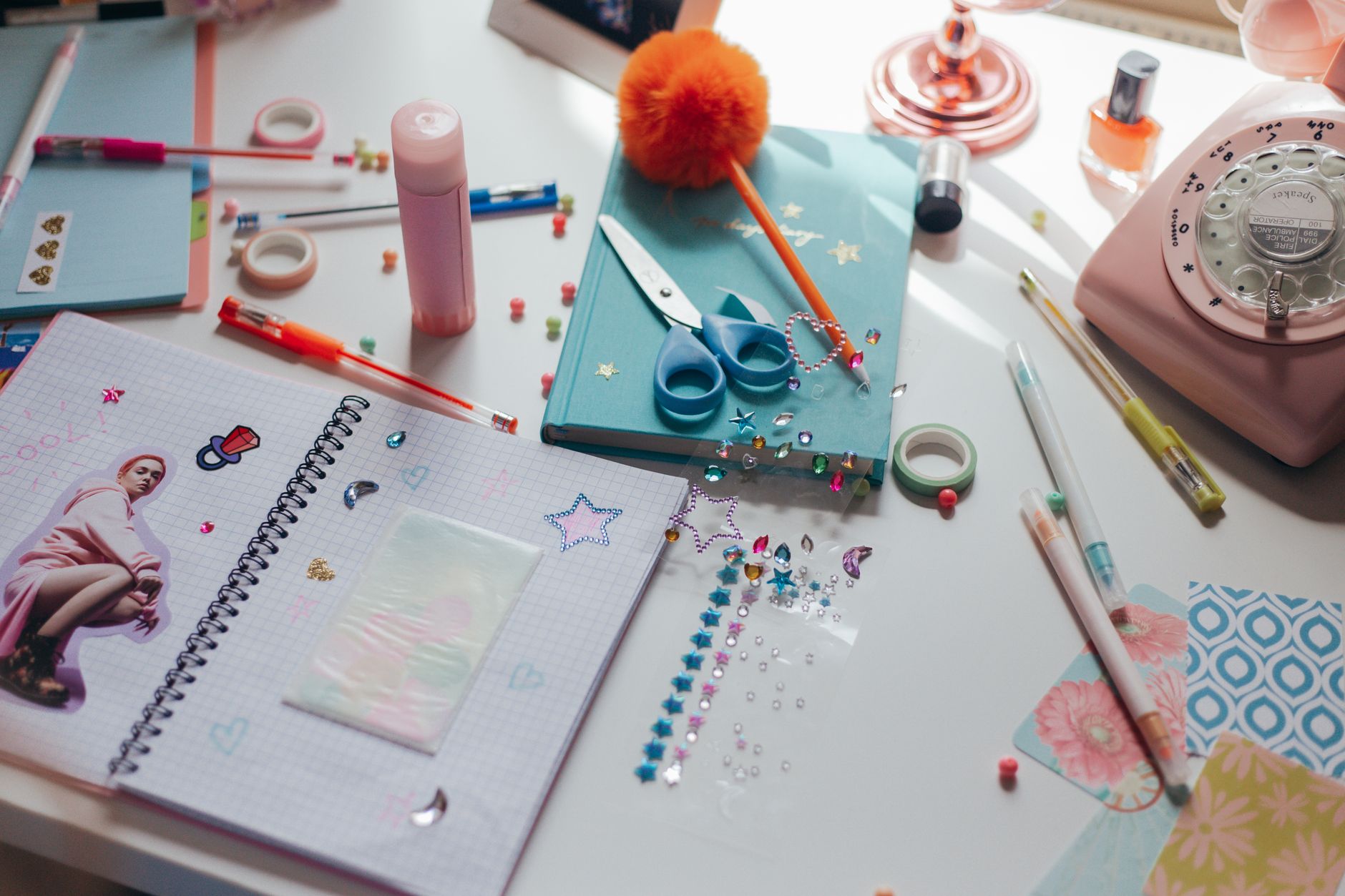
A vibrant collection of scrapbooking supplies including stickers, washi tape, and pens. Photo: ansiveg / Pexels
Every crafter knows the joy of creating, but also the frustration of a cluttered workspace. Imagine a world where every ribbon, every bead, and every paint tube has its designated place, easily accessible and ready for your next project. This isn't just a dream; it's the tangible result of implementing thoughtful craft room organization ideas. The core principle behind effective organization is to create a system that supports your creative process, rather than hindering it. When your supplies are neatly stored and logically arranged, you spend less time searching for items and more time actually crafting. This enhanced efficiency directly translates into more creative output and a significantly more enjoyable crafting experience. One of the most critical aspects of smart craft storage is understanding the different types of supplies you have and their unique storage requirements. For instance, fabric scraps might benefit from being folded and stored in clear bins or drawers, while small, intricate beads might require specialized compartment organizers. Yarn, with its tendency to unravel, often fares best in baskets or dedicated yarn dispensers. Paper, particularly cardstock and scrapbook paper, needs flat storage to prevent bending and creasing, making flat files or vertical paper organizers ideal. Tools, from scissors to rotary cutters, should be kept within easy reach but safely stored to prevent accidents. By categorizing your items not just by type but also by their physical characteristics and frequency of use, you can choose storage solutions that are truly fit for purpose. This detailed approach to categorization is the bedrock upon which a truly organized craft room is built, ensuring that every item, no matter how small, contributes to the overall order and functionality of your space. Embracing these principles transforms your craft room from a potential source of stress into a sanctuary of inspiration, allowing you to fully immerse yourself in the joy of making. For more tailored advice, explore various craft storage solutions that fit specific needs.

Maximizing Space: Ingenious Craft Room Organization Ideas for Small Areas

Female artist deeply engaged in painting at her creative studio workspace. Photo: Andrea Piacquadio / Pexels
Not everyone is blessed with a sprawling dedicated craft studio; many crafters operate within the confines of a spare corner, a tiny closet, or even a section of a multi-purpose room. This doesn't mean you have to sacrifice organization or creative potential. In fact, small craft rooms often demand the most ingenious and space-saving craft room organization ideas. The key to success in compact spaces lies in thinking vertically and utilizing every inch efficiently. Wall space, which is often overlooked, becomes your most valuable asset. Installing floating shelves, pegboards, and wall-mounted storage units can free up precious surface area, making your room feel larger and more functional. Pegboards, in particular, are incredibly versatile, allowing you to hang tools, baskets, and even small shelves, all customizable to your evolving needs. Beyond vertical storage, consider multi-functional furniture. A folding table that can be tucked away when not in use, an ottoman with hidden storage, or a rolling cart that serves as a mobile workstation are all excellent investments for small spaces. Clear, stackable containers are another game-changer, allowing you to see what's inside without having to open every box, and their stackable nature means you can build upwards. Don't forget the back of doors! Over-the-door organizers can hold everything from vinyl rolls to ribbon spools. Even under-bed storage bins can be repurposed for bulkier craft supplies. The goal is to maximize storage without making the space feel cramped or overwhelming. By carefully planning and selecting solutions that serve multiple purposes or take advantage of often-ignored areas, you can create an incredibly efficient and inspiring craft haven, no matter its size. Embracing these smart strategies will ensure that your small craft room feels expansive in its functionality and organization.

Designing Your Workflow: Craft Room Organization for Optimal Creativity
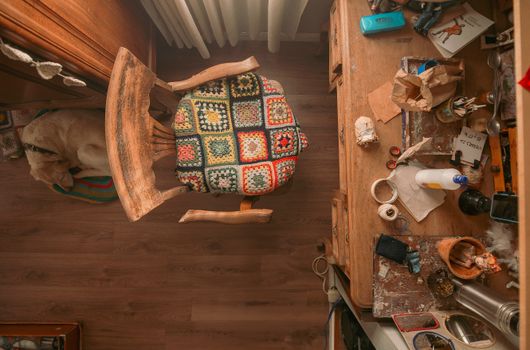
Top-down view of a craft room with a colorful quilted chair, cluttered desk, and a sleeping dog. Photo: Natalia Olivera / Pexels
An organized craft room isn't just about neatness; it's about optimizing your workflow to foster creativity and minimize interruptions. The way you arrange your supplies and tools can profoundly impact your crafting efficiency and enjoyment. One of the most effective craft room organization ideas is to create distinct zones within your space, even if it's a small area. For example, you might have a 'cutting zone' with your cutting mat and tools, a 'sewing zone' with your machine and notions, or a 'painting zone' with your easels and paints. By grouping related items together, you reduce the need to constantly move across the room or rummage through multiple containers, thus maintaining a seamless creative flow. Consider the 'prime real estate' in your craft room – the areas you can reach without getting up or stretching. These spots should be reserved for your most frequently used items. Less frequently used supplies can be stored in higher shelves or deeper drawers. Labeling is paramount here; clear, consistent labels on all containers, drawers, and shelves will save you countless minutes of searching. Not only does this help you find items quickly, but it also ensures that everything is returned to its proper place, preventing future clutter. Think about your crafting process: what tools do you grab first? What materials do you use most often? Design your layout to mirror this natural progression. For instance, if you primarily sew, ensure your fabric stash is easily accessible, along with your sewing machine, threads, and cutting tools. If you're a paper crafter, your paper, adhesives, and dies should be within arm's reach. Regular maintenance, such as a quick tidying session after each project, is also crucial for sustaining this organized workflow. By intentionally designing your craft room's layout to support your individual crafting habits, you transform it into a powerful engine for innovation and productivity. Dive deeper into optimizing your space with expert craft room design tips.

Essential Craft Organization Tips and Common Mistakes to Avoid
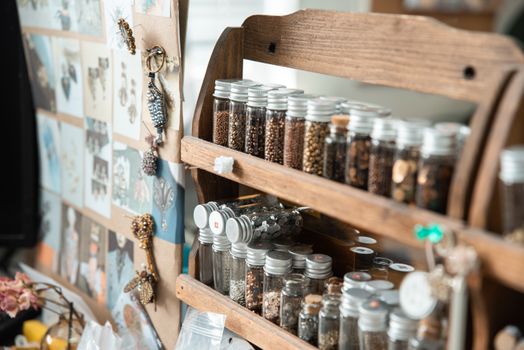
Close-up of a home sewing space with beads, a moodboard, and organized jar collection for creative projects. Photo: Yuliya Duzhaya / Pexels
Achieving and maintaining an organized craft room is an ongoing journey, but a few key tips can make the process much smoother. Conversely, being aware of common pitfalls can save you time, money, and frustration. Here are some essential craft room organization ideas and mistakes to steer clear of: **Essential Tips for Success:** * **Declutter Ruthlessly and Regularly:** Don't just organize clutter; eliminate it. If you haven't used something in a year or more, consider if it truly belongs in your space. Schedule a small decluttering session weekly or monthly. * **Go Vertical:** As mentioned, walls are goldmines for storage. Use shelves, pegboards, and wall-mounted organizers to keep surfaces clear. * **Use Clear Containers:** Being able to see your supplies at a glance saves time and prevents you from buying duplicates. Clear bins, jars, and drawer organizers are invaluable. * **Label Everything:** Even if you think you'll remember where something is, label it. This is especially helpful for small items or when others might need to find something. * **Create Zones:** Group similar items and tools together. This makes finding and putting away items intuitive and supports your creative workflow. * **Invest in Mobile Storage:** Rolling carts are fantastic for moving supplies to where you're working, or for tucking away when not in use, particularly in small spaces. * **Utilize Drawer Dividers:** Drawers can quickly become a chaotic mess without proper dividers. Use small bins or custom dividers to keep items separated and tidy. **Common Mistakes to Avoid:** * **Buying Storage Before Decluttering:** This is a classic mistake. You'll end up with storage solutions that don't fit your actual needs or, worse, just store more clutter. * **Over-Organizing:** While organization is good, too many tiny containers for every single item can become overwhelming and impractical. Find a balance. * **Ignoring Vertical Space:** Wasting wall space is a missed opportunity, especially in smaller rooms. Look up! * **Not Labeling:** Relying on memory is a recipe for disorganization. Labels are your best friend. * **Forgetting About Maintenance:** Organization isn't a one-time event. Without regular tidying and decluttering, your craft room will quickly revert to chaos. * **Buying Too Many 'Cute' Organizers:** Resist the urge to buy storage just because it looks good. Prioritize functionality and how well it solves a specific storage problem. * **Storing Unfinished Projects Indefinitely:** Dedicate a specific bin or area for 'Works in Progress' to prevent them from becoming permanent clutter. Revisit them regularly.

Comparison

FeatureBest Option: Modular Storage SystemAlternative 1: Pegboard & Wall ShelvesAlternative 2: Clear Stackable Bins
FlexibilityHighly customizable, reconfigurableGood, but limited to wall spaceModerate, can stack but not reconfigure
VisibilityVaries by module (drawers, open shelves)High for items on hooks/open shelvesHigh, if bins are clear
Space EfficiencyExcellent, often vertical & tailoredExcellent for vertical spaceGood for stackable items
CostHigher initial investmentModerate, depending on sizeLower, very budget-friendly
Ideal ForDedicated craft rooms, diverse suppliesSmall spaces, tool storageBulk items, fabric, yarn

What Readers Say

"These craft room organization ideas completely transformed my small craft corner. I can finally see all my supplies and find what I need instantly. It's truly a game-changer for my creativity!"

Sarah J. · Austin, TX

"As a woodworker and crafter, my workshop was a disaster. The tips on vertical storage and zoning in this guide were invaluable. My wife is amazed at how tidy everything is now."

Mark D. · Seattle, WA

"After implementing these organization strategies, I finished three projects in one week that had been sitting for months! The reduced stress from clutter made all the difference."

Emily R. · Orlando, FL

"The ideas are fantastic, especially the emphasis on decluttering first. Some of the storage solutions recommended were a bit out of my budget, but I found great DIY alternatives using the core principles."

David L. · Denver, CO

"I used to spend half my crafting time searching for supplies. Now, everything has a home, thanks to these organization tips. My kids even help put things away because it's so clear where everything goes!"

Jessica M. · Chicago, IL

Frequently Asked Questions

What is the most effective first step for craft room organization?

The most effective first step is always to declutter. Before you buy any storage solutions, remove everything from your space, sort through it, and decide what to keep, toss, or donate. This ensures you're only organizing items you truly use and value, preventing wasted effort and money on unnecessary storage.

I have a tiny space; can I still have an organized craft room?

Absolutely! Small spaces benefit most from smart organization. Focus on vertical storage (shelves, pegboards), multi-functional furniture, and clear, stackable containers. Utilize overlooked areas like the back of doors or under-bed space to maximize every inch.

How do I organize different types of craft supplies, like fabric, yarn, and paper?

Each material has specific needs. Fabric is best folded and stored in clear bins or drawers. Yarn thrives in baskets or dedicated dispensers to prevent tangling. Paper requires flat storage in vertical or horizontal paper organizers to prevent creases. Tools should be easily accessible but safely stored, often on pegboards or in drawer dividers.

Are expensive storage solutions necessary for good craft room organization?

Not at all. While high-end solutions can be appealing, excellent organization can be achieved on a budget. Repurpose household items, use DIY solutions, and prioritize functionality over aesthetics. Clear shoeboxes, recycled jars, and simple shelving units can be just as effective as expensive modular systems.

How do I maintain an organized craft room once I've set it up?

Maintenance is key. Implement a 'one-in, one-out' rule for new supplies. Dedicate 5-10 minutes after each crafting session to put things away. Schedule a monthly quick tidy-up and an annual deep declutter. Consistency is more important than infrequent, massive overhauls.

Who benefits most from implementing craft room organization ideas?

Anyone who engages in crafting, from hobbyists to professional artists, benefits immensely. An organized space reduces stress, saves time searching for supplies, fosters creativity by making materials accessible, and can even prevent buying duplicate items, saving money in the long run.

Is there a risk of over-organizing my craft room?

Yes, there is a risk of over-organizing. While organization is good, having too many tiny containers for every single item can become cumbersome and impractical, making it harder to put things away. Aim for a balance where items are grouped logically, but not excessively subdivided, to maintain ease of use.

What are the future trends in craft room organization?

Future trends lean towards highly customizable and modular systems that adapt to evolving craft interests. Smart storage solutions with integrated lighting or charging ports, and sustainable, eco-friendly organizational products are also gaining popularity. The emphasis will continue to be on maximizing functionality in increasingly smaller living spaces.

Ready to transform your creative sanctuary? Start implementing these craft room organization ideas today and unlock a world of seamless crafting. Your organized space awaits, ready to inspire your next masterpiece.

Topics: craft room organization ideascraft storage solutionsorganizing craft suppliessmall craft room organizationdiy craft storage
Leo List
Brampton weed
Adultwork EstrelaBet Vai de Bet R7 Bet Betão Galera Bet Rainbet Bet9ja Shop SportyBet BetKing Sisal Loto Foot Hollywoodbets YesPlay Odibets RushBet Jugabet BetWarrior BetCity MSport betPawa Fortebet